Eye Conditions
Eye conditions can affect people of all ages and may change the way they see the world around them. Some develop gradually, while others can appear more suddenly. Changes in vision may affect everyday activities such as reading, recognising faces, moving around safely and maintaining independence. Regular eye tests, noticing changes early and seeking professional advice can all help protect and maintain sight.

Common Eye Conditions
Age-related macular Degeneration (AMD)
Cataracts
Glaucoma
Diabetic Retinopathy
Inherited or Genetic Conditions eg. Retinitis Pigmentosa, Stargardt disease
Infection or Inflammation
Injury or Trauma
Neurological Conditions
Other medical conditions
Cataracts
Cataracts are a common eye condition in which the eye's natural lens becomes cloudy.
Normally, the lens is clear and helps focus light onto the retina at the back of the eye, producing sharp vision. When a cataract develops, less light reaches the retina, causing vision to become blurred or cloudy.

Age-Related-Macular-Degeneration
(AMD) is a common eye condition that affects the macula, the small central part of the retina at the back of the eye.
The macula is responsible for sharp, detailed central vision, which we use for activities such as reading, recognising faces, watching television, driving, and seeing fine detail.

Diabetic Retinopathy
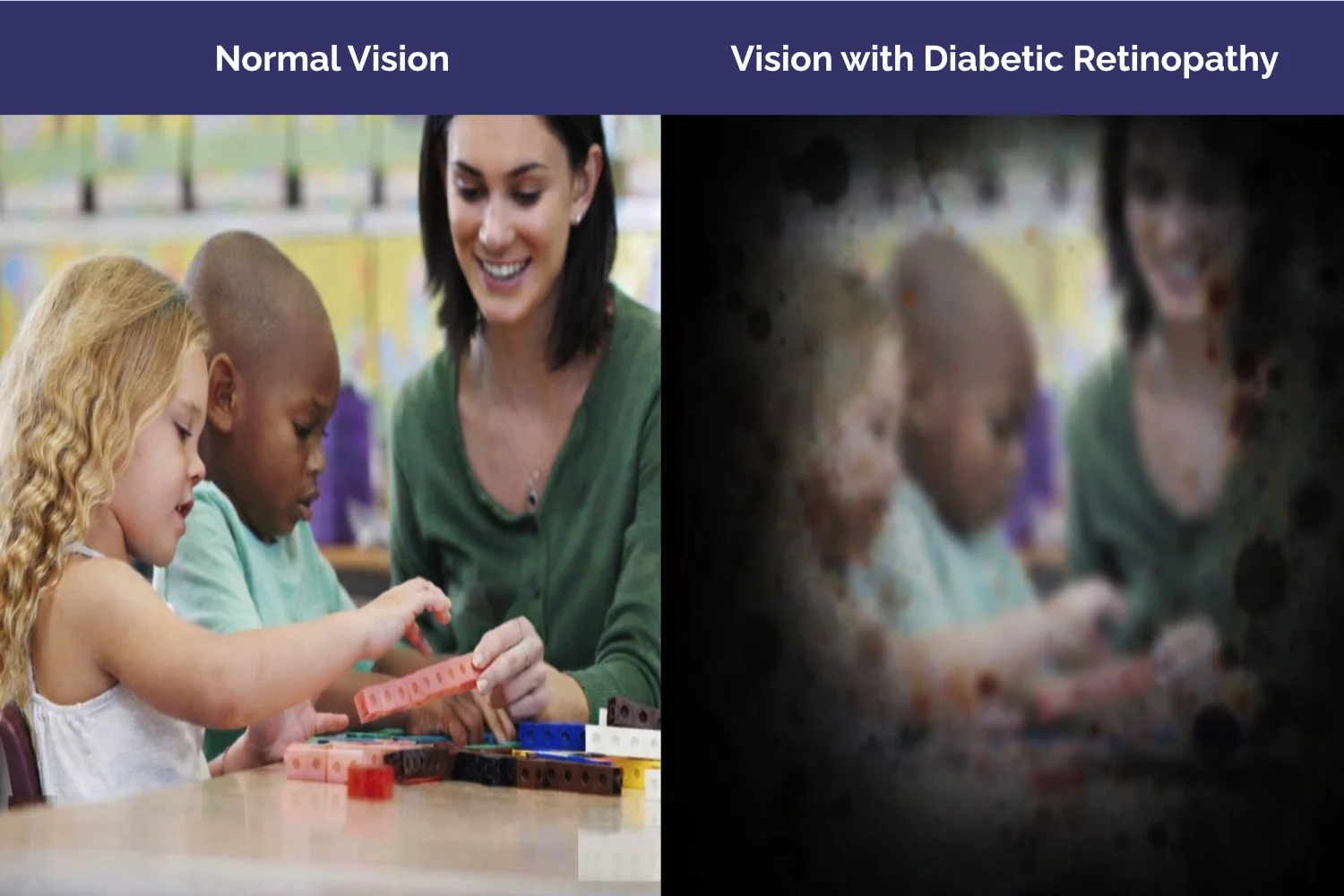
Diabetic retinopathy is an eye condition that can affect people with diabetes.
It occurs when high blood sugar levels damage the tiny blood vessels in the retina – the light-sensitive layer at the back of the eye that sends visual information to the brain. Over time, these damaged vessels may leak fluid or blood, become blocked, or cause abnormal new blood vessels to grow, potentially affecting vision and, if left untreated, leading to sight loss or blindness.
Hemianopia
Hemianopia is the loss of vision in half of the visual field — usually the same half in both eyes.
Most commonly caused by stroke, brain injury or a brain tumour, it affects the brain’s visual pathways rather than the eyes themselves. People may bump into objects, miss people approaching from their blind side, or struggle with reading because part of what they would normally see is simply not visible. Approaching from their sighted side and placing important items where they can see them can help.

RETINITIS PIGMENTOSA
Retinitis pigmentosa gradually affects the retina, causing progressive loss of vision.
Retinitis pigmentosa (RP) is a group of inherited eye conditions that cause the light-sensitive cells in the retina to gradually deteriorate. Night vision is often affected first, followed by loss of peripheral vision, which can lead to tunnel vision. People may struggle particularly in dim light, at dusk or when moving between different lighting conditions. The condition usually progresses slowly over many years and can eventually lead to severe sight loss.

Glaucoma
Glaucoma damages the optic nerve and can gradually reduce peripheral vision.
Glaucoma is an eye condition that damages the optic nerve, often due to increased pressure inside the eye. It usually develops slowly and may cause no noticeable symptoms at first. Over time, peripheral vision can gradually be lost, creating a tunnel-like effect, while central vision may remain unaffected until later stages. People may bump into objects, miss things at the edges of their vision or find busy and unfamiliar environments more difficult to navigate.

Charles Bonnet syndrome
Charles Bonnet syndrome can cause vivid visual hallucinations in people with significant sight loss.
Charles Bonnet syndrome (CBS) occurs when the brain responds to reduced visual information by creating images of its own. People may see patterns, shapes, people, animals or even detailed scenes that are not really there. The hallucinations can appear remarkably vivid and may last from seconds to hours. CBS is caused by sight loss – it is not a mental health condition or a sign of dementia – but the experience can understandably be frightening or unsettling.

Colour Vision Deficiency
Colour vision deficiency affects the ability to distinguish between certain colours.
Also known as colour blindness, it most commonly affects the ability to tell reds and greens apart. Most people with colour vision deficiency can see colours, but some shades may appear very similar or indistinguishable. This can make everyday tasks involving colour-coded information, maps, charts, clothing or food more difficult. It is usually inherited, although it can sometimes develop as a result of an eye condition or certain medication.

Nystagmus
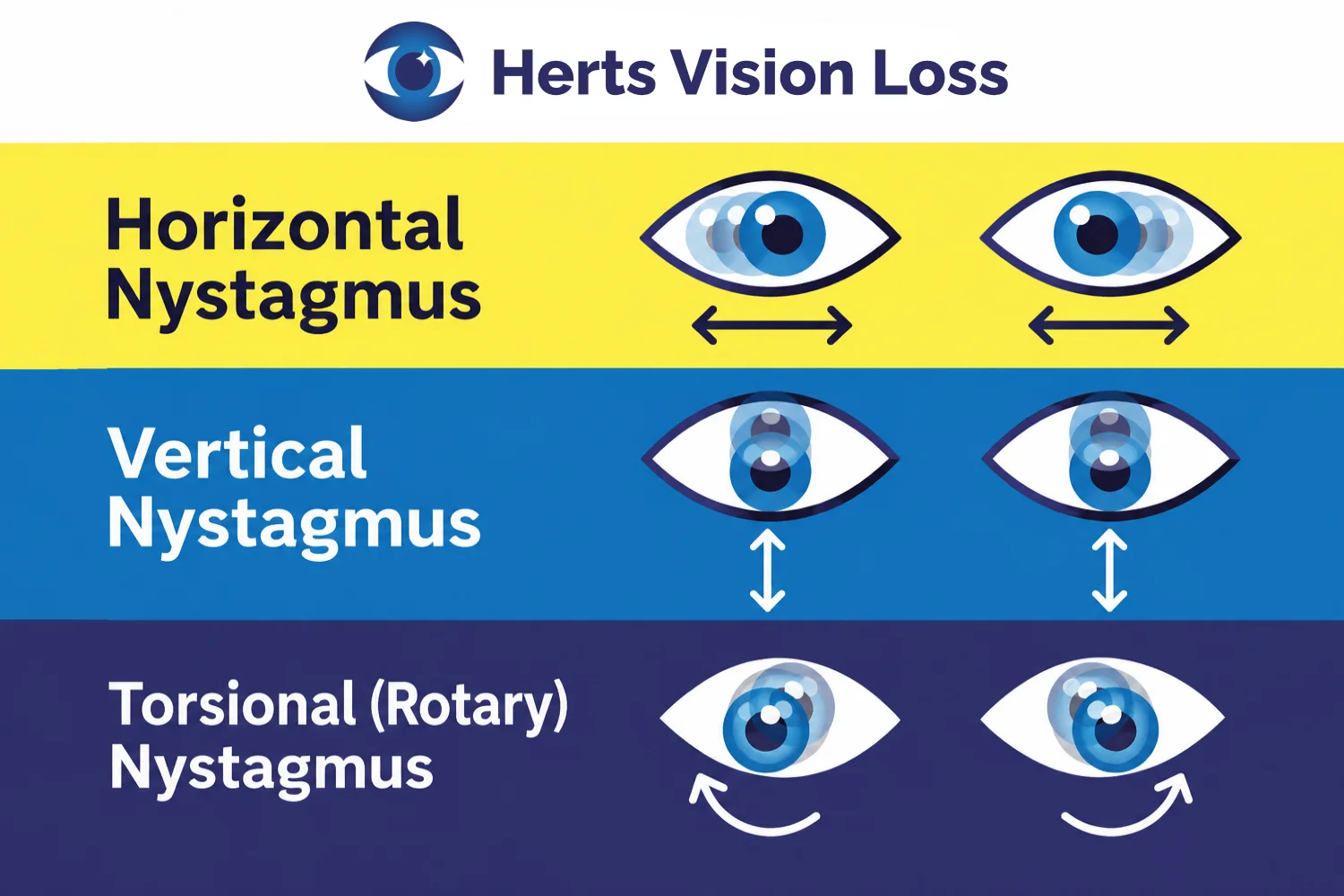
Nystagmus causes involuntary, repetitive movements of the eyes that can affect vision.
The eyes may move from side to side, up and down or in a circular motion, and the movement cannot simply be stopped by trying. Although the world does not usually appear to move, vision may be reduced and tasks such as reading or recognising faces at a distance can be more difficult. Some people adopt a particular head position where the eye movement slows and their vision is clearest.